Into the Dead 2: Zombie Killer
- 4.5
- Rating
- 10.00M
- Installs
- Free
- Price

 Analysis by App-foxy
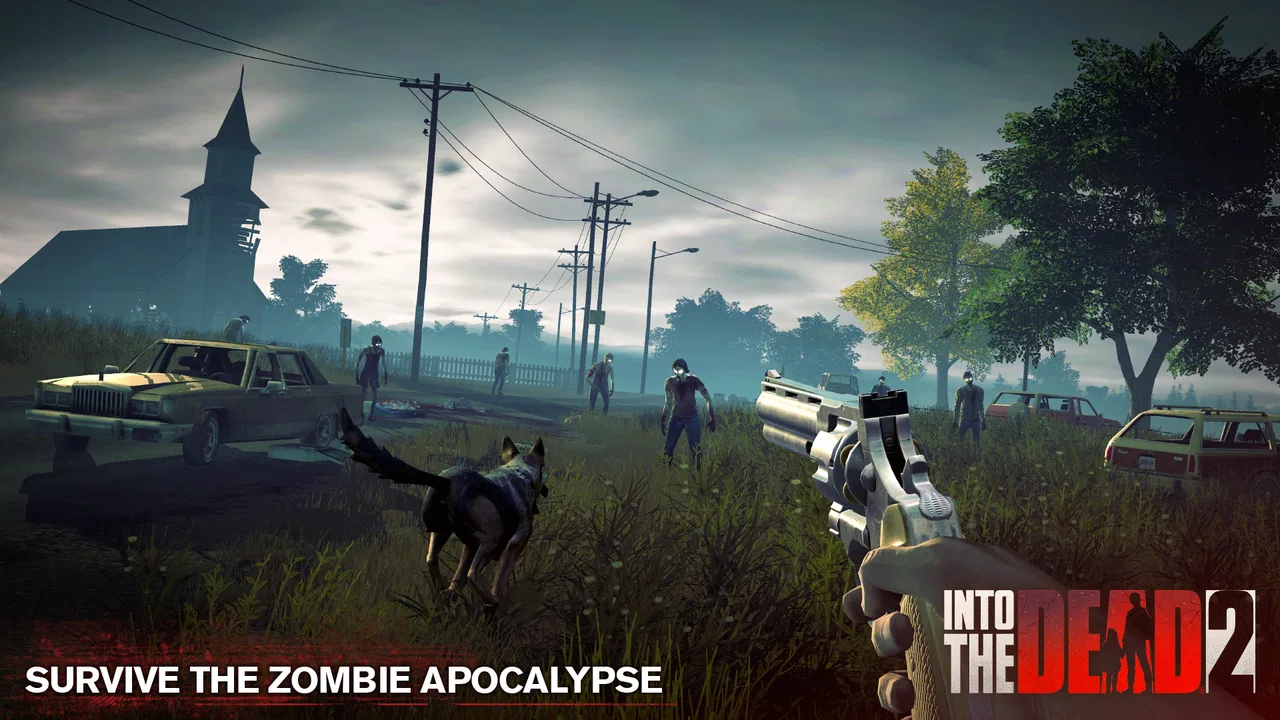
I found Into the Dead 2 most interesting when I stopped treating it like a conventional shooting game. It is an action game about staying alive while moving through a zombie-filled world, but its pressure comes from making quick decisions while your character keeps pushing forward. You are not simply standing in one place and clearing a room. You are constantly judging threats, ammunition, obstacles, and the safest route ahead.
That design gives it a very specific appeal. I can pick it up for a short session, immediately understand what I need to do, and still feel that a careless choice has consequences. At the same time, the running structure can feel restrictive if I want the freedom to explore, pause, or approach every encounter at my own pace. My overall view is positive: this is a polished mobile zombie shooter for players who enjoy tense, repeatable action, but it is not the best match for someone looking for a deep open-world survival game or a relaxed shooter.
Why the forward-moving action works so well
The central strength is the way movement and combat are tied together. Instead of giving me unlimited time to line up every shot, the game keeps the situation moving. Zombies approach from different directions, the path ahead can become dangerous, and I have to decide whether to fire immediately, change position, or conserve resources. That creates more tension than a basic target-shooting gallery, because accuracy is only one part of surviving.
You May Also Like

 Blood Strike: 2.5 Anniversary
Blood Strike’s Loadouts Turn Every Drop Into a Tactical Gamble
A close look at Blood Strike’s custom loadouts: how fast access to signature weapons reshapes its battle royale rhythm, rewards preparation, and narrows the gap between fights.

 Pandora - Music & Podcasts
Pandora’s Music Is Easy to Start, but Harder to Recover
Pandora’s strength is its low-effort path from a seed to a station. Its weak spot is how much confidence it asks you to place in connection, setup, and quiet recovery.

 8 Ball Pool
 Is Built on Rivalries, Rematches, and Routine
A close look at the rivalries, rematches, shared routines, and unanswered safety questions that turn a quick pool match into a persistent mobile community.

 Samsung Music
’s Quiet Strength Is Playing What You Already Own
Its reach comes less from spectacle than from dependable access to a personal library. That simplicity is both the app’s strongest retention engine and its ceiling.

 AccuWeather: Weather Radar
AccuWeather Review: A Quick, Clear Forecast for Everyday Decisions
For everyday plans, the best forecast is the one you can understand quickly. AccuWeather makes rain timing, radar, and local conditions easy to act on, with a few trade-offs.

 Hill Climb Racing
Why Hill Climb Racing Still Turns Crashes Into One More Run
A tiny car, a bumpy hill and one more upgrade: Hill Climb Racing keeps resurfacing because its simple chaos makes every near-miss feel personal.
More From Our News Desk



I especially like how this structure makes small mistakes feel meaningful. Missing a shot is not just a minor loss of points when several enemies are closing in. Wasting ammunition can leave me with fewer options during the next encounter, while reacting too slowly can turn a manageable stretch into a frantic escape. The result is a rhythm of short bursts of control followed by moments where I have to recover from an imperfect decision.
The game also benefits from its clear identity. PIKPOK has built the experience around zombie-apocalypse action rather than trying to imitate a full console-style shooter on a phone. The controls are designed for quick mobile interaction, and that makes the game easy to understand even when the action becomes busy. I do not need a long explanation before I can begin making useful decisions.
That accessibility does not mean the game is mindless. The most satisfying runs come from learning how to read the road ahead. I began paying more attention to groups rather than individual zombies, looking for the threat most likely to block my route and thinking about when a stronger weapon would be worth using. This is one of the less obvious pleasures of the game: improvement comes not only from unlocking more equipment, but also from becoming calmer and more selective under pressure.
A campaign that gives short sessions a sense of purpose
One reason I kept returning is that the game gives each run a clear objective instead of making every attempt feel like an endless score chase. Progress through the campaign provides context for the action, while missions encourage me to try again with a better plan. That structure suits mobile play because I can complete a focused portion of the experience without committing to a long uninterrupted sitting.
For example, I can imagine playing during a commute or while waiting for an appointment. I would rather attempt a mission with a definite goal than enter a huge map, spend several minutes searching, and stop before anything meaningful happens. Into the Dead 2 is much better at delivering immediate activity. It respects the fact that mobile players often play in fragments, even though some sessions naturally become longer when I want to improve a previous attempt.
The mission-based approach also gives failure a useful role. When I lose, I usually understand that something went wrong: I fired too early, failed to notice a threat, or chose a route that left me exposed. That clarity makes retrying feel more reasonable. I am not simply hoping for a random improvement; I can change one part of my approach and see whether it helps.
Still, the same structure can become repetitive for players who need constant mechanical variety. The basic loop remains focused on moving, aiming, firing, and surviving. The atmosphere and objectives help refresh it, but the game does not suddenly transform into a completely different genre after a few sessions. I recommend treating it as a game built around refining a strong core loop, not as a broad survival sandbox with unlimited ways to play.
Weapons, resources, and the cost of panic
The weapon choices matter because every tool changes how I handle a dangerous stretch. A powerful option can solve an immediate problem, but using it without thinking may leave me less prepared later. I found that the best approach was not to fire at everything that moved. I saved stronger responses for moments when several threats overlapped or when a normal attack was unlikely to create enough space.
This creates a useful trade-off between safety and efficiency. Playing too cautiously can also be a mistake if I allow enemies to surround me or lose the chance to clear a route. The game rewards a controlled kind of aggression: act quickly, but do not let fear decide every shot. That balance gives the combat more texture than its simple controls might suggest.
A practical tip is to use early attempts as scouting runs rather than expecting every attempt to succeed. I watch where danger tends to appear, note which sections make me waste ammunition, and then retry with a specific adjustment. This is more effective than spending resources randomly in the hope that a stronger loadout will solve every problem. The game feels fairer when I approach it as a pattern-learning shooter.
Another useful habit is to avoid playing while distracted. Because the character keeps moving and threats can appear quickly, this is not a game I enjoy when I am constantly switching to another task. A short, attentive session is more satisfying than a longer one where I repeatedly lose because I was not watching the screen. That may sound obvious, but it is an important distinction between this game and slower turn-based or management-focused zombie titles.
Atmosphere without losing mobile readability
The zombie setting works because the game keeps the danger visually immediate. I can understand that I am in trouble without needing a complicated interface or lengthy explanation. The focus stays on the path, the enemies, and the next decision. That clarity is valuable on a smaller screen, where excessive menus or tiny indicators would quickly become frustrating.
The mature tone is also worth considering before installing it. The content rating is Mature 17+, so I would not recommend it as a family-friendly action game or something to hand to a young child. The presentation is built for players who are comfortable with a darker zombie-apocalypse setting, and that tone is part of the experience rather than a minor decorative detail.
At the same time, the atmosphere does not replace gameplay. I never felt that the game was asking me to admire its setting while neglecting the action. The visual and audio presentation mainly support the feeling of urgency, helping ordinary encounters feel more dangerous. Players who want a story-heavy horror adventure may find the action emphasis too strong, but fans of fast zombie survival should understand the priorities immediately.
Where the experience becomes less comfortable
The biggest limitation is that the forward-running format reduces freedom. I cannot approach the world like a traditional survival game where I choose a direction, search every building, and establish my own routine. The game is designed around a guided path and immediate threats. That focus is excellent for momentum, but it also means I have less room to experiment with exploration or long-term planning.
There is also a certain repetition in the way tension is produced. The pressure of enemies, ammunition, and movement is effective, yet it is still the same kind of pressure from one attempt to the next. If I am already tired of running-based action games, the zombie theme alone may not be enough to keep the loop fresh. I would choose a slower survival title instead if my main goal were crafting, base construction, or open-ended discovery.
The free-to-play model deserves a realistic look as well. The game costs nothing to start, but optional purchases range from $0.99 to $99.99 per item. That does not automatically make the experience unsuitable, but it means I would approach progression with a budget in mind. I prefer deciding in advance whether I am willing to spend anything, rather than making small impulse purchases whenever a difficult section slows me down.
For me, the best way to enjoy it is to treat purchases as optional conveniences rather than requirements. I first play with the resources available through normal progress and only consider spending if I am still enjoying the game after understanding its loop. This avoids a common mobile-game trap: paying before knowing whether the basic experience is actually a good fit.
Another point to consider is device compatibility. The game requires Android 7.0 or later, so users with older Android devices should check their system before planning around it. On supported hardware, the current version is 1.87.0, which is the version I would look for when checking that the installation is up to date. These details matter because action games are much less enjoyable when performance or compatibility gets in the way of precise reactions.
Who should play it, and who should skip it
I think the strongest audience is players who want a zombie shooter that starts quickly and works well in compact sessions. If you enjoy repeating a difficult section to improve your timing, making quick choices under pressure, and gradually becoming more efficient, this game has a lot to offer. It is also a good choice for someone who likes the idea of survival horror but does not want a slow, inventory-heavy experience.
It can suit both casual and more committed players, but in different ways. A casual player can enjoy a few missions whenever there is time, while a more dedicated player can focus on refining routes, managing ammunition, and improving performance. The important thing is being comfortable with repetition. The game rewards practice more than passive progression, so players who dislike retrying failed sections may become frustrated.
I would skip it if I want a competitive multiplayer shooter, a large explorable map, or a detailed crafting system. I would also look elsewhere if I need a completely child-friendly game, because the Mature 17+ rating makes the intended audience clear. Players who prefer careful stealth, broad tactical planning, or slow-burn storytelling may find the constant forward pressure too narrow.
Compared with a standard mobile shooter, this one feels more focused and less dependent on wandering through menus or searching for a match. Compared with an open survival game, it is more controlled and much easier to pick up for a short session. Compared with an endless runner, it asks for more deliberate combat decisions instead of relying mainly on reflexive lane changes. That middle position is its real selling point: it combines the urgency of running with enough weapon and resource judgment to make each attempt feel personal.
What the popularity tells me, and what it does not
The game has earned a 4.5 average from around 717 thousand ratings and has passed 10 million installs, which suggests that its particular blend of zombie action and mobile-friendly sessions has connected with a large audience. I see that as useful reassurance, but not as proof that everyone will enjoy it. The same focused design that attracts many players can disappoint someone expecting a more open-ended game.
It has also been available since October 11, 2017, giving it a longer presence than a brand-new release. That helps explain why the game feels established rather than experimental. The developer is PIKPOK, and the current version is 1.87.0. For a prospective player, the practical takeaway is simple: this is a mature mobile title with a well-defined identity, not a rough first attempt that still needs to discover what it wants to be.
The free entry point makes trying it straightforward, but I would still pay attention to how I respond to its first sessions. If I enjoy learning enemy patterns and managing pressure, the game is likely to hold my attention. If I immediately resent the fixed movement or repeated attempts, additional content or purchases will not solve the underlying mismatch. The right question is not whether it has enough material in the abstract; it is whether this particular action loop feels good to repeat.
My final recommendation
Into the Dead 2 succeeds because it understands the value of a clear mobile action loop. It gives me immediate danger, simple controls, and enough resource judgment to make survival feel earned. Its strongest moments arrive when I am forced to choose quickly without losing sight of the larger goal: keep moving, stay calm, and use the right response at the right time.
Its limitations are equally clear. The guided movement leaves little space for exploration, the core encounters can become repetitive, and the optional purchase range means I would play with spending boundaries. Those are meaningful compromises, not minor footnotes. They matter especially for players comparing it with open-world survival games or slower zombie adventures.
Even with those reservations, I would recommend it to a friend who wants a focused zombie action game for Android and enjoys improving through repeated attempts. I would start with the free version, play attentively rather than rushing through it, and judge the experience by how satisfying the basic survival loop feels before considering any purchase. If that loop clicks, this is an energetic and approachable way to spend short sessions. If I wanted freedom, crafting, or a quieter horror experience, I would choose a different kind of game instead.
FAQs for Into the Dead 2: Zombie Killer
01What is Into the Dead 2: Zombie Killer about?
Into the Dead 2: Zombie Killer is an action-packed endless-running shooter set during a zombie apocalypse. You play as James, a survivor trying to reach his family while running through dangerous, undead-infested environments. The game combines automatic forward movement, weapon-based combat, story chapters, missions, and several gameplay modes, creating a fast-paced experience focused on survival and progression.
02Is Into the Dead 2 free to download and play?
Yes, Into the Dead 2: Zombie Killer can generally be downloaded and played for free on supported Android and iOS devices. However, it includes optional in-app purchases that may help players obtain weapons, upgrades, resources, or other advantages more quickly. Progress can still be made without spending money, although free players may encounter waiting periods, limited resources, advertisements, or a slower upgrade process.
03Does Into the Dead 2 require an internet connection?
Many of the game’s main running and shooting activities can be enjoyed offline, which makes Into the Dead 2 convenient for playing while traveling or without reliable mobile data. Nevertheless, an internet connection may be required for advertisements, purchases, cloud-related features, updates, events, or certain additional content. Availability can vary depending on the device, operating system, and version installed.
04What devices are compatible with Into the Dead 2?
Into the Dead 2 is designed for modern Android and iOS smartphones and tablets, but compatibility depends on the operating system version, available storage, and device performance. Because the game contains detailed environments, numerous zombies, and action effects, older or entry-level devices may experience reduced performance, longer loading times, or limited visual quality. Check the official store listing before downloading.
05Does Into the Dead 2 contain ads, purchases, or violent content?
The game contains frequent zombie violence, firearms, blood effects, frightening creatures, and an intense post-apocalyptic atmosphere, so it may not be suitable for younger players or anyone sensitive to graphic action. It also includes advertisements and optional in-app purchases. Parents should review the game’s age rating and use device-level purchase restrictions if children will be playing.
Pros
- Fast-paced runner gameplay is easy to learn but difficult to master.
- Large weapon selection lets you adapt to different zombie encounters.
- Story chapters provide clear progression and varied objectives.
- Offline play makes it suitable for gaming without a constant connection.
- Atmospheric visuals and sound create a tense zombie-survival experience.
Cons
- Energy limits can interrupt longer play sessions.
- Upgrades and premium weapons may require significant grinding.
- Some missions feel repetitive after extended play.
- Frequent rewards and offers can make menus feel cluttered.
- The game requires considerable storage space on some devices.

Into the Dead 2: Zombie Killer
Gallery